


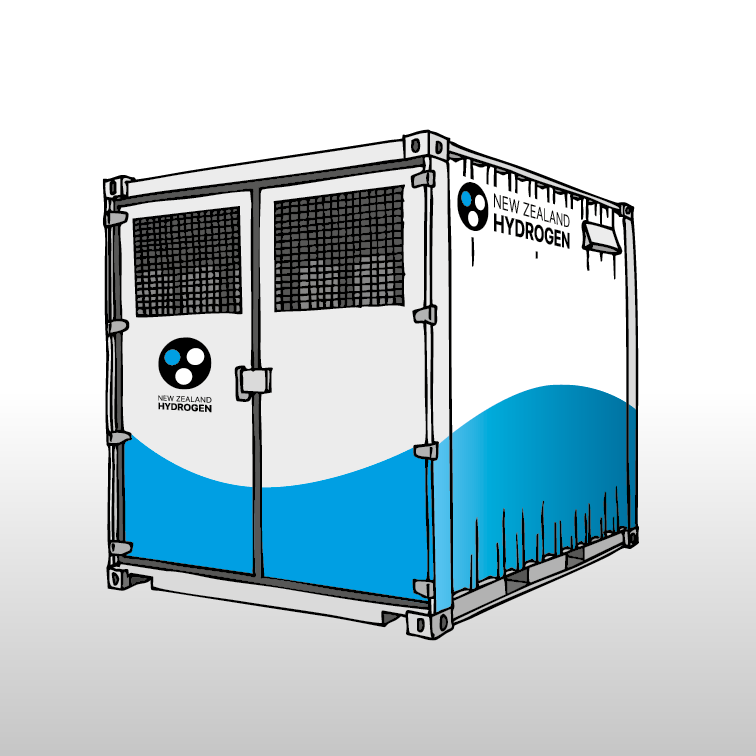
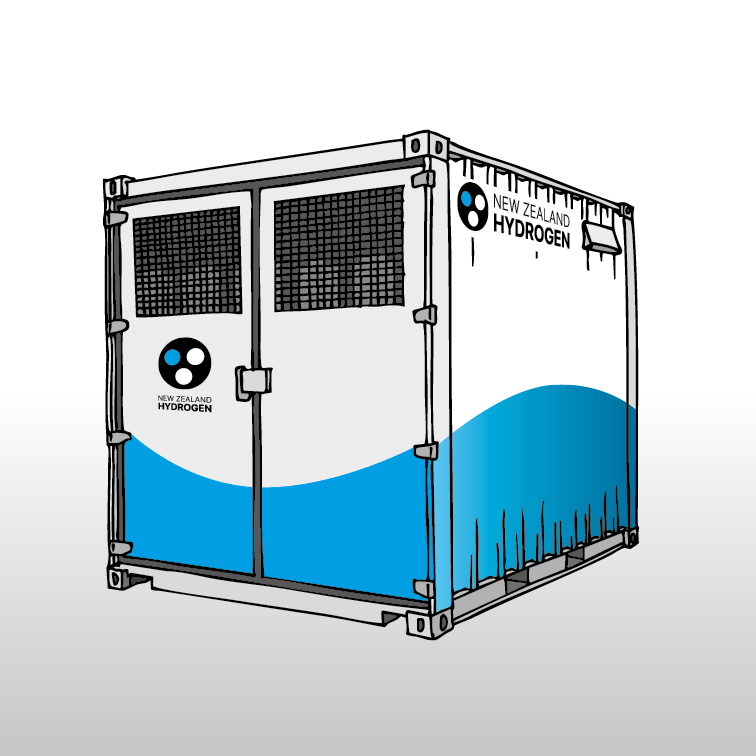
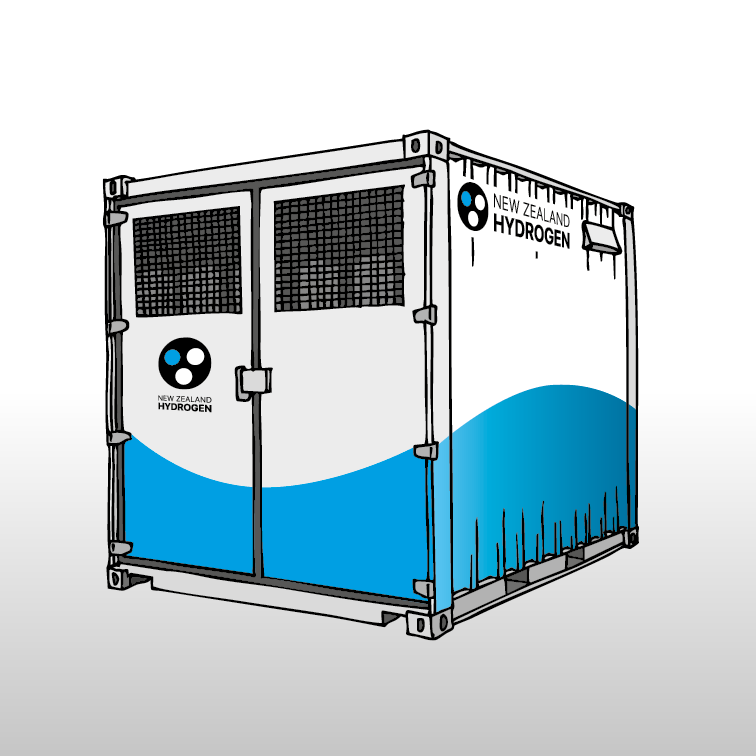
MHE-1-200
- 1 kg hydrogen per day
- Power 10 kW
- Water 20 lt per day
Make Hydrogen on Site
Produce up to 10 kg of hydrogen per day and create a private fuel supply matched to the needs of a small FCEV fleet.
New Zealand Hydrogen can configure micro production with the purification, compression, storage and dispensing needed for an integrated on-site energy or refuelling solution.
A 700-bar configuration can support compatible fuel cell passenger vehicles at the place where they return each day. This gives a business an alternative to waiting for a large public refuelling station or arranging repeated deliveries of compressed gas.
The system is planned around real daily demand rather than the scale of a public forecourt. Production can run steadily, hydrogen can accumulate in buffer storage and vehicles can be refuelled according to the customer’s operating schedule.

Product Range - Micro Electrolysers
Why This Scale Matters
A small hydrogen project can be commercially useful without becoming a public station or a large industrial plant.
Production of up to 10 kg per day is enough to provide more than one complete fill of a typical 700-bar passenger FCEV, or to support several vehicles receiving smaller daily top-ups. The actual fleet capacity depends on each vehicle’s consumption, distance travelled, reserve policy and refill schedule.
This scale can suit corporate vehicles, rental fleets, local-authority cars, tourism operations, technology demonstrations and businesses that want to introduce FCEVs gradually. A return-to-base operating pattern makes daily demand easier to predict and allows one private installation to serve several users.
The benefit is not only the quantity of hydrogen produced. It is the ability to make fuel locally, control access and establish refuelling where the customer needs it.
How the Complete System Works
A vehicle-refuelling installation combines several correctly matched components.
Production rate, storage quantity and dispenser performance are separate design decisions. A correctly sized buffer can allow a modest electrolyser to build fuel over time and then support a larger individual fill when the vehicle returns.
Benefits of On-site Supply
On-site electrolysis gives a fleet operator a direct, traceable source of hydrogen at the place where vehicles are based.
Hydrogen can be produced steadily between vehicle visits, stored for planned refuelling and matched to a predictable return-to-base schedule. This gives the operator greater control over fuel availability, energy inputs and future expansion without requiring the scale or public access of a conventional refuelling station.
For suitable sites, a micro electrolyser can provide a practical way to begin using FCEVs now, learn from real operating data and grow production, storage or fleet capacity as demand develops.
Project Planning
Every installation needs a site-specific engineering, safety and commercial assessment.
The starting inputs are the number and type of vehicles, daily kilometres, hydrogen consumption, timing of refills, desired reserve and future fleet growth. These determine production, compression, buffer storage and dispensing requirements.
The project must also confirm electricity and treated-water supply, available space, vehicle movements, separation distances, ventilation, hazardous-area requirements, consenting, equipment certification, emergency response, maintenance access and operator training.
Hydrogen quality and the refuelling protocol must be compatible with the vehicles. A stated 700-bar pressure does not by itself confirm that every vehicle, dispenser or refill pattern is compatible.