


MFCG-15-100
- Toyota fuel cell
- 15 kW output
- 100 kWh battery
Power with Hydrogen Fuel Cells
Reliable electricity from hydrogen, configured for mobile, standby and continuous-duty applications.
Hydrogen fuel cell power systems convert stored hydrogen into electricity without combustion. Battery storage can be integrated to respond quickly to changing demand, support equipment start-up and provide higher short-duration output while the fuel cell operates steadily.
The range covers trailer-mounted, packaged and containerised configurations. Each system can be matched to the load profile, operating hours, hydrogen supply and resilience requirements of the site.
At the point of use, a fuel cell produces electricity without diesel exhaust, smoke or carbon dioxide emissions. The full environmental benefit depends on how the hydrogen is produced and delivered.
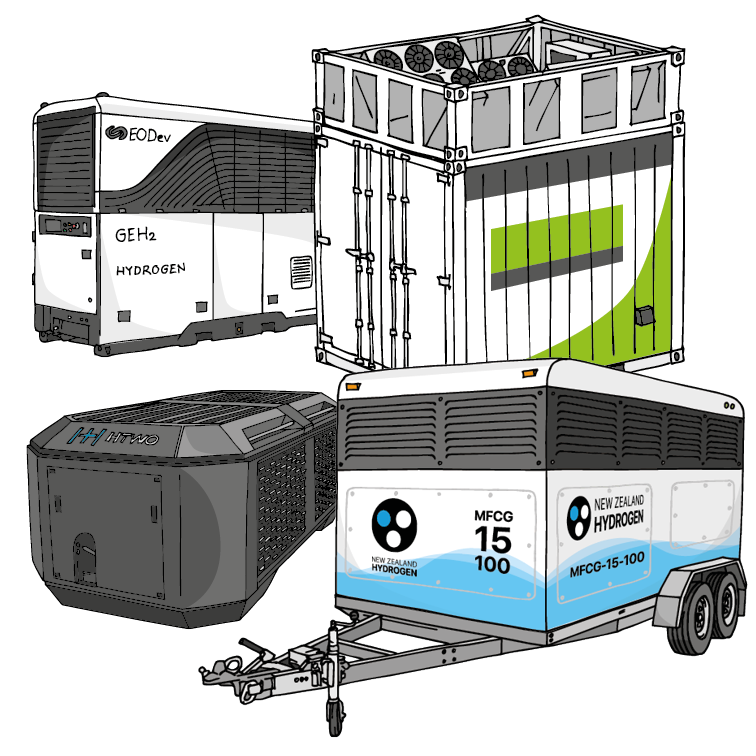
Product Range - Hydrogen Fuel Cell Power Systems


Hybrid Power
Fuel cells and batteries perform different jobs within one coordinated power system.
The fuel cell provides energy for longer operation, while the battery responds immediately to load changes, motor starting currents and short periods of higher demand. This allows the fuel cell to operate more steadily within an efficient range and reduces unnecessary cycling.
A hybrid arrangement is especially useful where average power demand is moderate but occasional peaks are much higher. It can also provide reserve energy while hydrogen is changed over or while the fuel cell completes a controlled start or stop sequence.
The system should be selected from the site’s real energy profile, not from peak power alone.
Applications
Different formats allow hydrogen power to serve temporary, remote and critical loads.
Mobile systems can move between sites as demand changes. Containerised systems provide more space for batteries, controls, cooling and electrical integration where the application is longer term or requires higher output.
System Planning
A practical installation depends on much more than its rated output.
System planning should consider average consumption, peak demand, starting current, daily energy use, required reserve, operating schedule and the consequences of an interruption. These inputs determine the appropriate fuel cell, battery, inverter and control configuration.
The site also needs a suitable hydrogen supply, compliant storage and connections, ventilation, electrical protection, security, maintenance access and any required approvals. Delivery pressure and gas purity must match the selected equipment.
New Zealand Hydrogen can help define the operating profile, compare mobile and fixed options, and develop a staged solution that can expand as demand and hydrogen availability grow.